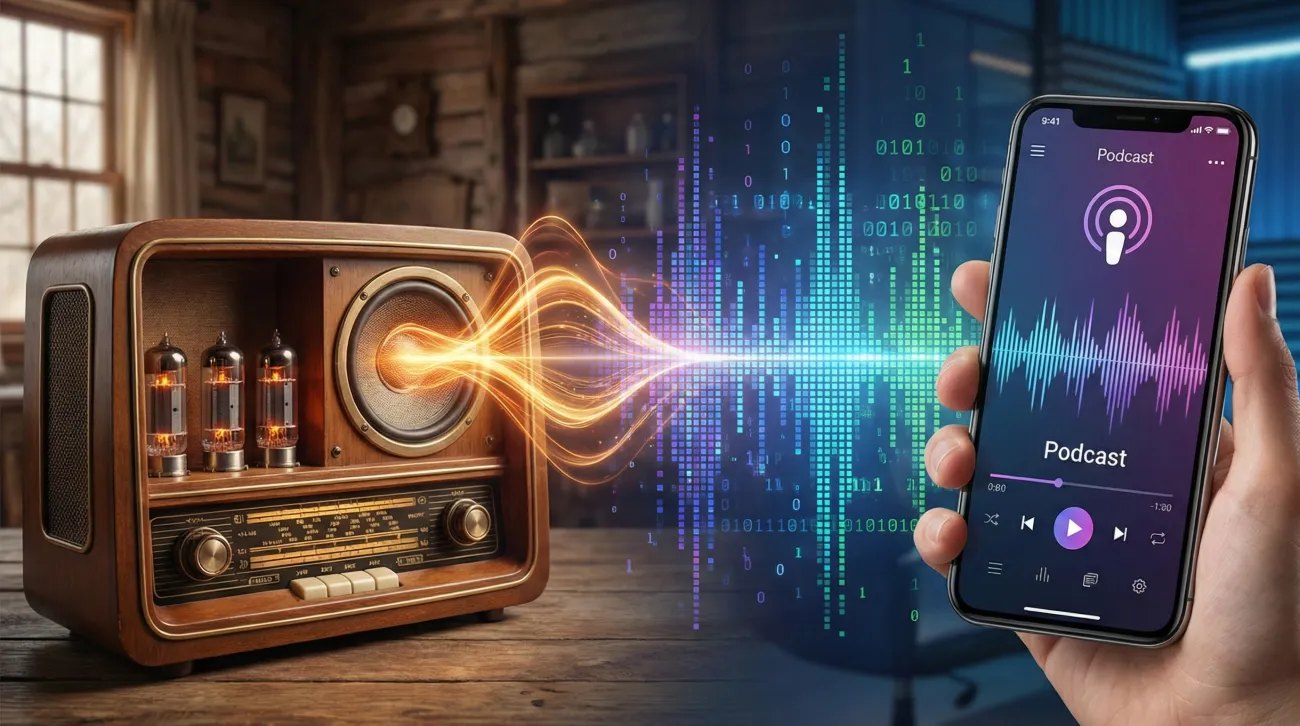
With the growth of streaming, many people wonder if it is still worth investing in FM radio or if the future is entirely digital. The truth is that both formats have different strengths. Understanding these differences helps you decide where to start - and, if you already have a station, how to take it online without losing your audience.
What is Traditional FM Radio
FM radio (and AM) transmits via electromagnetic waves picked up by any receiver device. It is the classic model, present in cars, sound systems, and cell phones with receivers. Its main characteristics include:
- Regional reach: the signal covers a city or region, depending on the authorized power.
- Depends on public licensing: government authorization is required to operate legally.
- High costs: transmitters, antennas, maintenance, and energy represent a significant investment.
- Strong local ties: it serves as a reference for the community and reaches audiences that do not use the internet.
What is Web Radio
Web radio broadcasts its programming over the internet via streaming. Instead of an antenna, it uses a server that distributes audio to connected listeners. Among the advantages:
- Unlimited reach: can be listened to in any country, 24 hours a day.
- No licensing required: does not require government authorization to operate.
- Low cost: no investment in transmitters; just a streaming platform is needed.
- Digital features: own app, real-time statistics, online requests, and integration with social media.
Side-by-Side Comparison
| Criterion | FM Radio | Web Radio |
|---|---|---|
| Reach | Regional | Global |
| Licensing | Mandatory | Not required |
| Initial cost | High | Low |
| Audience data | Estimates | Real-time and accurate |
| Interaction | Phone / social media | App, requests, push notifications |
Why FM Stations are Going Digital
Migrating to digital does not mean abandoning FM. It means expanding reach. A station that has always been listened to only in its city can now be followed by former residents in other states, by Brazilians abroad, and by new audiences discovering the station through the app or website. Additionally, digital offers precise data: you know how many people are listening now, where they come from, and how long they stay - valuable information to attract advertisers.
Radio has not died; it has multiplied. From AM to streaming, audio remains one of the most intimate and present mediums in people's routines.
How to Migrate Your FM Radio to the Internet
The process is simpler than it seems:
- 1. Choose a streaming platform that offers a website, app, and statistics, like BRASCAST.
- 2. Connect your audio: you can send the same signal that is already broadcasting on FM to the streaming server, transmitting simultaneously.
- 3. Create a digital presence: website with a player, app with the station's logo, and profiles on social media.
- 4. Promote the new channel: announce on FM air that the station is now also on the app and website.
In no time, your traditional station gains a second life in digital, without losing its loyal FM audience.
So, which to choose?
If you are starting from scratch and want low cost and broad reach, web radio is the natural path. If you already have an AM/FM station, the answer is not "or," it is "and": maintain the traditional signal and conquer the digital world at the same time. Both strategies complement each other and, together, maximize your audience and revenue opportunities.
Conclusion
Web radio and FM radio are not enemies - they are allies. Streaming technology has made it possible to take any station to the world with an affordable investment. Whether to create a new radio or to digitize an existing one, comprehensive platforms like BRASCAST offer everything you need to broadcast with quality and grow your audience without geographical barriers.
Frequently asked questions
What is the difference between web radio and FM radio?
FM radio transmits via radio waves and has a limited reach to a region; web radio broadcasts over the internet and can be listened to anywhere in the world, without public licensing and with much lower costs.
Can an FM radio have an online version?
Yes. AM and FM stations can (and should) also broadcast over the internet. This expands the audience to all of Brazil and the world, without replacing the traditional signal.
Do I need government licensing to have a web radio?
No. Unlike AM/FM stations, a web radio does not require public licensing. You only need to respect the copyright of the music being broadcast.