
Arriving in the country in 1922 and starting operations the following year, radio became part of Brazilian daily life. From the mythical portable radio glued to the ear to listen to soccer matches to the traffic companion, it still maintains its presence. With the internet, instead of suffering a predicted death since the emergence of TV, it found a new expression. Simply because on the web it is possible to make real-time broadcasts through streaming services. This article is special for those interested in starting an online radio. Next, learn how to create one focused on journalism.
These are tips to help independent broadcasters benefit from the democratization provided by new technologies. It is relatively simple to do and presents two great advantages. The first is that it does not depend on concessions like traditional signals. The second is that good promotion can make your reach much larger than it would be on AM/FM. Keep in mind that through social networks and news portals, there is easy access to qualified information sources.
It is thus possible to enroll in the long tradition that the medium has of agility and credibility. This means we are talking about the path to professional radio journalism while avoiding the greatest danger of the internet: Fake News. An interesting fact in this regard is that accessing news is the fourth most frequent online activity of Brazilians. The habit is surpassed only by email exchanges, access to social networks, and the use of internet banking. This is what a survey conducted by Computer World in 2017 informs us. Interested in the idea discussed here but inexperienced in the subject? Don't worry, we introduce the concept of web radio next.
What is an online radio and how does it work
Before starting, it is important to clarify one point: online radio is not merely a substitute for analog services. It should be understood as an alternative or development of these. Although it is necessary to admit that the languages are very close. For us, what matters most is the central difference regarding traditional broadcasting: the mode of transmission. Instead of electromagnetic waves transmitted through the air, data digitization is used. In the first case, there is a geographical limitation to the reach of the transmission. In the second, it is possible to reach an audience on a global scale.
Due to this mode of diffusion, there is no need for a concession from Anatel, as happens with traditional radios. The simplified reason for concessions is that the space through which the waves are transmitted is not infinite. Moreover, it belongs to the country, and therefore a regulatory agency is needed to manage and control its use. The internet, on the other hand, uses other diffusion channels, with a very high capacity for transferring digital data. This includes sound. Among the benefits is the guarantee of better quality in the transmitted audio.
To access the service through streaming, radios use servers. These have the capacity to propagate live or recorded content, and there are even traditional broadcasters that also invest in digital distribution technology to increase their reach. After all, anyone with an internet connection can “tune in” to an online station. For independent broadcasters, there is also the great benefit of promotion - an activity that can be done on websites and social media pages.
How to create an online radio focused on journalism
First, you need to define who your target audience will be. What is the extent of the audience? Local? National? International? The content should fit the profile of the listener you aim to reach. In most cases, local information is the easiest to work with. However, due to the shortening of distances provided by the global network, addressing national issues is perfectly feasible. The important thing, we reiterate, is to balance the content to offer what interests listeners the most.
In addition to presenting news and unique approaches to topics that have already exploded in traditional media and on the internet, pay attention to the form. Radio texts follow the general rules of journalism. Therefore, they should be short and objective, prioritizing what we call the inverted pyramid. In this text production technique, the most relevant information is presented first, followed by complementary details and contextualization. Thus, your notes need to inform right away the following data:
• What happened?
• With whom did it happen?
• When did it happen?
• Where did it happen?
• How did it happen?
• Why did it happen?
Equally important are the characteristic devices of radio language. For example: did you know that redundancy informs? Many people may catch the broadcast halfway. Therefore, it becomes common practice to repeat the main information of a note before concluding it. When giving news, the descriptive value of the information should not be forgotten. In the absence of images, it is up to the broadcaster to provide material that helps the listener to imagine what happened. Finally, use simple language and carefully check the information disclosed. Relying on reliable sources and conducting thorough research is inseparable from good journalism. And don't forget that good diction and an appropriate rhythm for the listener's understanding are essential.
Necessary equipment
Of course, nothing described so far is useful if you do not invest in equipment. Fortunately, an online radio does not need high-cost devices, such as receivers and antennas. To start, you just need a computer that runs well and without freezing. This is because powerful machines with professional configurations are not necessary for audio transmission purposes. It will be from this PC that your radio will operate, connecting to the internet. Software and online systems will assist in the transmission.
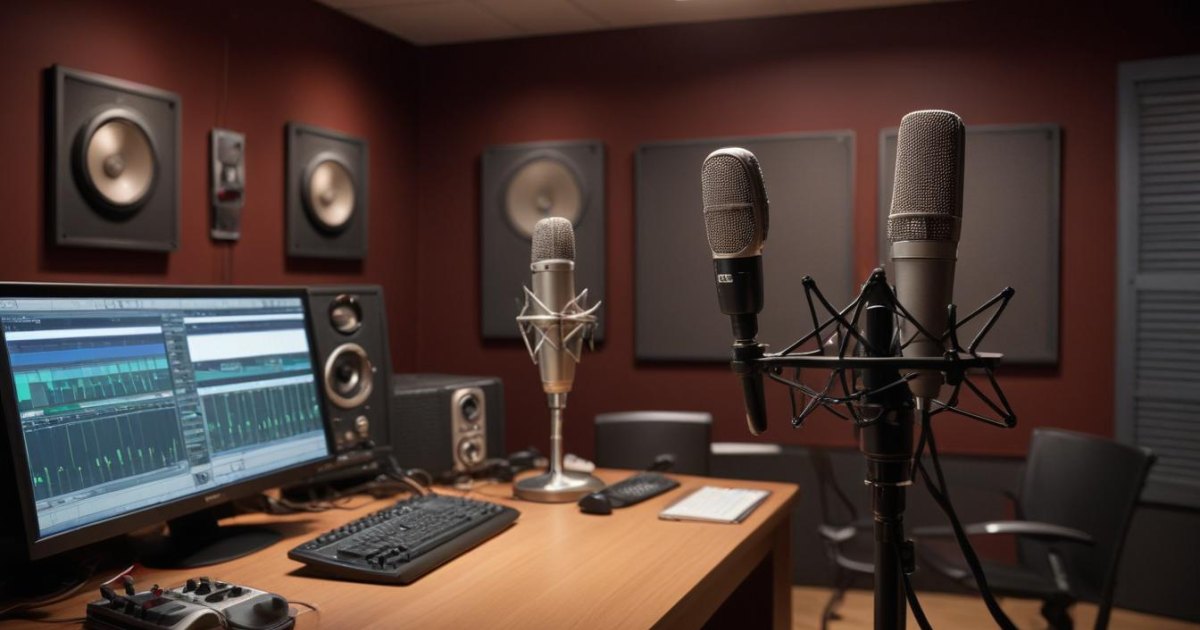
The second essential item to start your activities is the microphone. It is advisable to invest in a good combination of this object with headphones for better audio capture and comfort. For beginners and tighter budgets, a headset can be used, a product that combines both tools. The microphone taken separately is usually classified into two types: directional and omnidirectional.
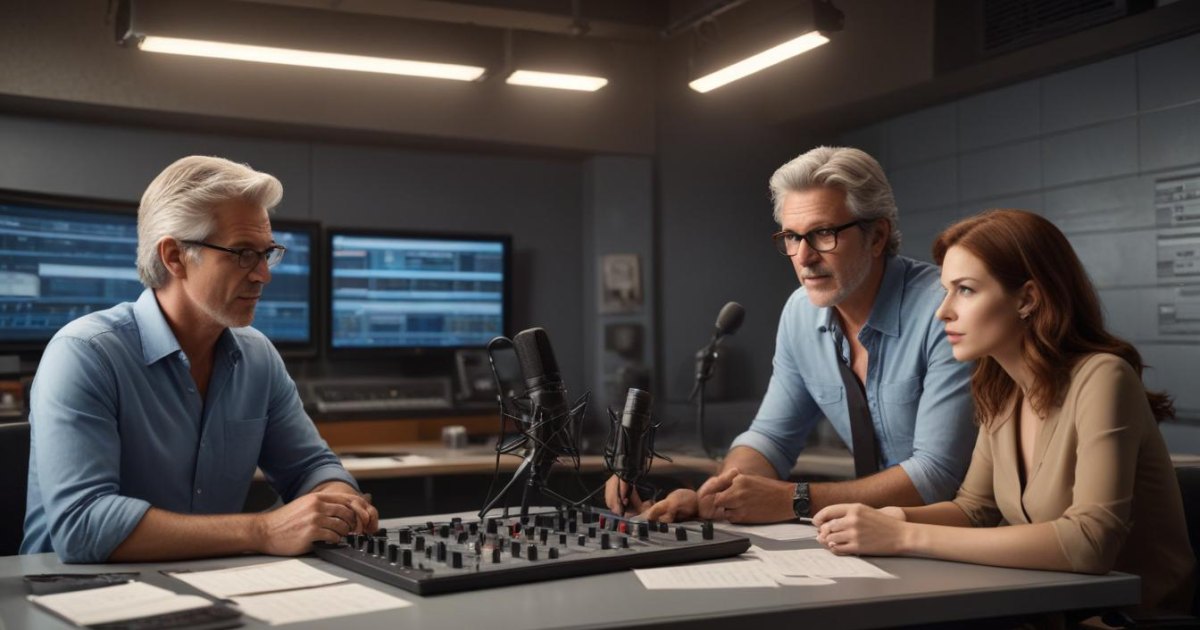
The first captures in a specific direction, being less influenced by ambient sounds. It works well where two people are recording together or in round tables, as there is no voice leakage between microphones. The second type has a capture that works in all directions. They are more commonly used in cinema and television. Remembering that lapel microphones are of the omnidirectional type but have part of the audio “blocked” by the clothing to which they are attached.
Streaming services
Meeting all the requirements already explored in this text, it is time to look for a streaming service. The resources offered by these tools are not only varied but can also be tailored to your specific needs. Thus, you will finally be prepared to start your news radio on the internet.
Ready to take your radio to the next level? Visit the site of BRASCAST and check out our plans! With our solutions, you will have all the necessary support to transform your radio into a true success.