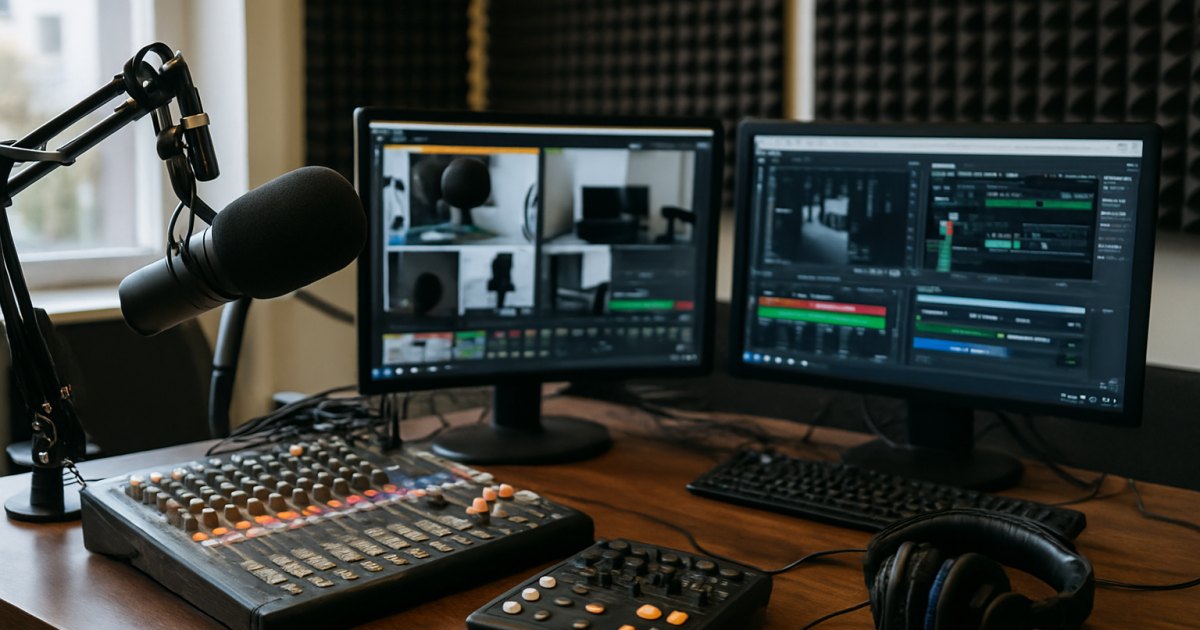

In the competitive world of radio, understanding and measuring the audience is fundamental to the success and continuity of any station. Whether it's an online or traditional radio, knowing your audience and their listening habits allows for the creation of more targeted content and improves the listener experience. With technological advancements, radios now have access to various tools and metrics that help accurately assess their audience.<\/p>
Understanding the metrics that really matter is essential for making data-driven decisions and optimizing the radio's programming. The challenge is knowing which data is truly important and how to interpret it to maximize results. Let's explore the essential metrics for measuring radio audience and how to use them to your advantage.<\/p>
Importance of Measuring Radio Audience<\/h2>
Measuring the radio audience is crucial to understand how your programming is being received by the public. Without this information, it becomes difficult to know if the content is reaching the target audience or if adjustments are needed. Additionally, audience data provides valuable insights into which programs are most popular and at what times there are more listeners.<\/p>
Knowing the audience helps make informed decisions about programming and marketing strategies. For example, if a specific program has high audience numbers, it may be beneficial to invest more in it or even expand its airtime. Similarly, programs with low audience numbers can be analyzed for improvements or replacements.<\/p>
Moreover, accurate audience data is essential to attract advertisers and partners. The better you can demonstrate the reach and influence of your station, the more attractive it will be to potential investors. Therefore, measuring the audience is not only a recommended practice but a necessity for any station that wishes to grow and thrive in the market.<\/p>
Essential Metrics for Online and Traditional Radios<\/h2>
For both online and traditional radios, some audience metrics are crucial. The number of simultaneous listeners is one of them, as it shows how many people are tuned in at a given moment. This metric is particularly useful for identifying audience peaks and adjusting programming for those times.<\/p>
The average listening duration is also an important metric, as it indicates how long listeners stay tuned in. A longer listening time suggests that the content is engaging and relevant to the audience. Otherwise, it may be necessary to review the content to increase engagement.<\/p>
Additionally, the geographical location of listeners provides insights into where your programming is being consumed the most. This is fundamental for localized marketing strategies and for better understanding your station's geographical reach. Online radios, in particular, can reach listeners from anywhere in the world, making this metric even more relevant.<\/p>
Audience Analysis Tools<\/h2>
There are several analysis tools available to help measure radio audience. In the case of online radios, streaming platforms often provide detailed reports on listener behavior. This includes data on simultaneous listeners, average listening duration, and location.<\/p>
For traditional radios, data collection can be a bit more complex, but still possible. Market research and audience audits are common methods to assess the reach of AM and FM radios. These surveys provide valuable insights that can be used to improve programming.<\/p>
Regardless of the type of radio, investing in analysis tools is crucial. They allow you to better understand audience behavior and make informed adjustments to your strategy. BRASCAST, for example, offers solutions for live broadcasting and Auto DJ that can integrate analysis tools to optimize audience measurement.<\/p>
Step-by-Step to Measure Radio Audience<\/h2>
Effectively measuring the radio audience involves some important steps. First, it is essential to define which metrics are most relevant to your station's goals. This may vary depending on whether your radio is online or traditional, but generally includes simultaneous listeners, listening duration, and geographical location.<\/p>
Next, it is necessary to choose the right tools to collect this data. For online radios, streaming platforms and digital analysis tools are essential. For traditional radios, market research and audience audits should be considered.<\/p>
Finally, it is important to regularly analyze the collected data. This allows you to identify trends, adjust programming, and improve the listener experience. BRASCAST offers plans for online radio that include support for audience analysis, making this process easier for your station.<\/p>
Common Mistakes in Measuring Audience<\/h2>
One of the most common mistakes in measuring audience is focusing only on raw numbers, such as total listeners, without considering context. While high numbers are desirable, they do not tell the whole story. It is important to analyze metrics such as engagement and listening time to have a more accurate view.<\/p>
Another frequent mistake is not adjusting programming based on audience data. Collecting data is just the first step - it must be used to inform decisions and strategies. Ignoring this information can lead to missed opportunities for engagement and growth.<\/p>
Finally, not investing in appropriate analysis tools is a mistake that many stations make. Without the right tools, it is difficult to gain a clear understanding of the audience. BRASCAST offers players and widgets that can help optimize the collection and analysis of audience data.<\/p>
Practical Success Examples<\/h2>
Many successful radios have used audience data to optimize their operations. One example is an online radio that, upon analyzing its metrics, discovered that most listeners tuned in during their commute. With this data, the radio adjusted its programming to include more relevant content during those times, increasing engagement.<\/p>
Another traditional station used market research to better understand its target audience. Based on the collected data, the radio was able to adapt its programming to better meet listener preferences, resulting in a significant increase in audience.<\/p>
These examples show how audience analysis can provide valuable insights that lead to more effective programming and greater audience engagement. Investing in tools and processes to measure the audience can make a significant difference in the success of a radio.<\/p>
Integration of Traditional and Online Radio<\/h2>
For traditional radios, integrating an online presence can be an effective strategy to increase audience. BRASCAST offers solutions for manageable radio websites, allowing traditional stations to reach new audiences via the internet.<\/p>
By combining traditional broadcasts with online content, radios can expand their geographical reach and attract listeners who prefer to consume digital media. This not only increases the audience but also diversifies monetization opportunities.<\/p>
The effective integration of traditional and online platforms allows radios to capitalize on their strengths, reaching a broader and more diverse audience. This complementary approach helps maximize the impact and relevance of a station in today's media landscape.<\/p>
Conclusion and Call to Action<\/h2>
Measuring the radio audience is an essential practice for any station that wants to stand out in the competitive market. With the right metrics and appropriate tools, it is possible to better understand the audience, optimize programming, and increase listener engagement.<\/p>
Whether you are an owner of an online or traditional radio, BRASCAST solutions can help enhance your operations and measure the audience effectively. From custom radio apps to advanced analysis tools, we are ready to support your station at every step.<\/p>
Don't forget to explore the options that best meet your needs and contact BRASCAST to learn more about how we can help your radio grow and thrive.<\/p>
Frequently asked questions
What are the most important metrics for measuring a radio's audience?
The most important metrics include the number of simultaneous listeners, average listening time, and retention rate.
How can BRASCAST help in audience monitoring?
BRASCAST offers integrated tools that allow real-time monitoring of key audience metrics, facilitating analysis and programming optimization.
Why is it important to measure the radio audience?
Measuring the audience allows you to understand the audience profile, adjust programming and strategies, and attract sponsors.